Arm Lift (Brachioplasty)
What Is an Arm Lift?
An arm lift, medically known as brachioplasty, is a surgical procedure designed to improve the contour of the upper arms by addressing excess skin, laxity, and, when appropriate, underlying fat. Aging, weight fluctuations, and genetics can all contribute to loose or sagging skin along the upper arms that does not respond to diet or exercise.
An arm lift restores a smoother, firmer, and more proportionate upper arm contour. The goal is not to create overly tight or artificial results, but rather to improve shape and confidence while maintaining a natural appearance.
How Does an Arm Lift Work?
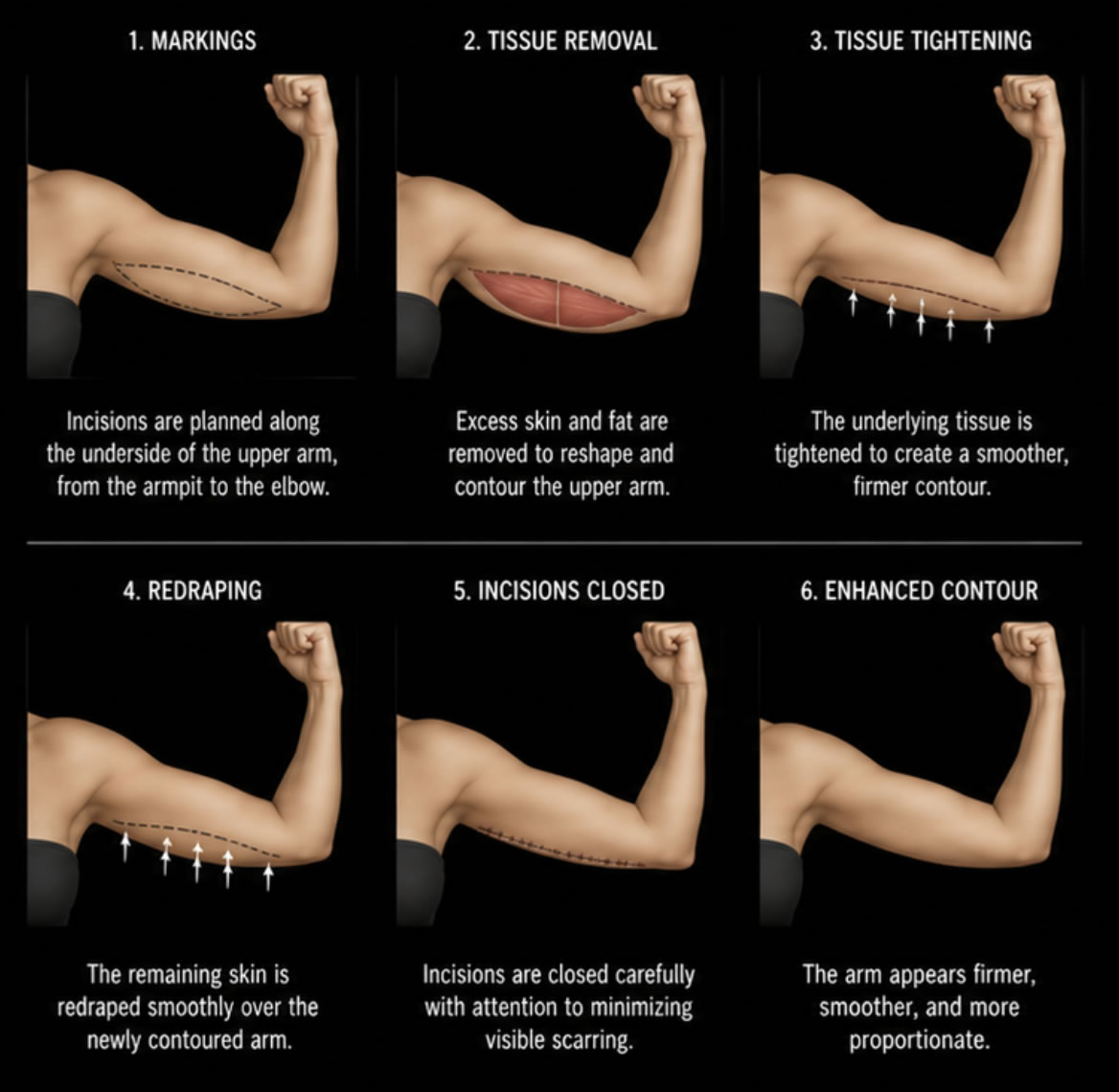
An arm lift works by removing excess skin and refining underlying tissues to restore arm contour.
During the procedure:
- Incisions are carefully planned along the inner or posterior aspect of the upper arm to allow for effective tightening while keeping scars as discreet as possible.
- Excess skin is removed, and underlying tissues are reshaped.
- In some cases, liposuction is performed at the same time to address excess fat and improve contour.
- The remaining skin is redraped smoothly and secured to create a more defined upper arm shape.
Dr. Pasha tailors the incision placement and surgical approach based on each patient's anatomy, skin quality, and aesthetic goals.
Will an arm lift leave visible scars?
An arm lift does require incisions to remove excess skin. Scars are carefully planned and placed to be as discreet as possible, typically along the inner arm. Over time, scars generally fade and become less noticeable.
Can liposuction alone treat loose arm skin?
Liposuction can remove excess fat but does not tighten loose skin. In patients with significant skin laxity, an arm lift is often necessary to achieve meaningful improvement.
How long do arm lift results last?
Arm lift results are long-lasting, especially when weight remains stable. While aging continues, patients typically enjoy sustained improvement in arm contour.
Can an arm lift be combined with other procedures?
Yes. Arm lifts are often combined with procedures such as breast surgery, body contouring, or liposuction to achieve comprehensive aesthetic improvement.
How do I know if an arm lift is right for me?
If loose upper arm skin affects your comfort or confidence and does not improve with exercise, a consultation with Dr. Pasha can help determine whether an arm lift is appropriate for your anatomy and goals.
Still have questions? We're here to help.
Schedule ConsultationRisks & Considerations
As with any surgical procedure, arm lift surgery carries potential risks, which are minimized when performed by an experienced, qualified surgeon. These may include:
- Swelling or bruising
- Infection
- Scarring
- Asymmetry
- Changes in sensation
- Delayed wound healing
A thorough consultation allows Dr. Pasha to assess skin quality, discuss scar placement, and determine whether an arm lift is the most appropriate option.
Who Is a Good Candidate?
Ideal candidates for an arm lift typically:
- Have loose or sagging skin of the upper arms
- Experience skin laxity following weight loss or aging
- Maintain a stable body weight
- Are in good overall health with realistic expectations
- Desire long-lasting improvement beyond what non-surgical treatments can provide
An arm lift is particularly effective for patients whose primary concern is excess skin rather than isolated fat alone.
Benefits of an Arm Lift
An arm lift can:
- Remove excess, sagging upper arm skin
- Improve arm contour and proportion
- Enhance confidence in sleeveless or fitted clothing
- Provide long-lasting improvement in arm shape
- Complement other body contouring procedures when appropriate
When thoughtfully performed, results appear natural and balanced rather than tight or overcorrected.
What to Expect During Recovery
After surgery:
- Swelling and bruising are common and gradually improve over the first few weeks.
- Mild discomfort and tightness are expected and typically well controlled with prescribed medications.
- Compression garments may be recommended to support healing and contour.
- Most patients return to light activities within 1-2 weeks.
- Strenuous activity and heavy lifting are usually restricted for several weeks.
Dr. Pasha provides a detailed postoperative plan tailored to each patient, emphasizing safety, comfort, and optimal healing.